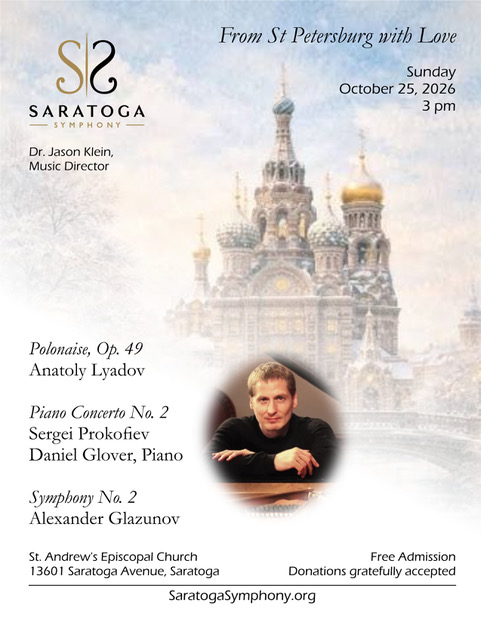
Prokofiev’s Piano Concerto No. 2 had its premiere just outside Saint Petersburg, at Pavlovsk Park in 1913, with the twenty-two-year-old composer himself at the piano. The reaction was infamous: critics reported walkouts and boos, with one observer complaining that “the cats at home can make better music than this.” Prokofiev, by his own account, was delighted by the uproar.
The score they played that night did not survive. It was destroyed in a fire at his home that occurred during the chaos of the Russian Revolution. In 1923, Prokofiev worked on reconstructing the concerto from memory and sketches, while also revising it extensively. He considered the new version, the one we hear today, to be different enough to be almost a new work. Though it has never matched the popularity of his Third Concerto, the Second has earned a reputation as one of the most demanding works in the concerto repertoire, and many pianists and critics consider it Prokofiev’s finest achievement for piano and orchestra.
Glazunov’s Symphony No. 2 had its own premiere in Saint Petersburg, in 1886, when the composer was only twenty-one. Dedicated to the memory of Franz Liszt, it carries a single theme through all four movements in a variety of guises, a technique that marked Glazunov’s arrival as a mature symphonic voice. The symphony was also the young composer’s homage to Alexander Borodin, whose epic, lyrical style Glazunov absorbed and carried forward, as is notable in the melodic charm of this work.
Prefacing the program is Lyadov’s Polonaise, written in memory of Alexander Pushkin. Together, the three works mark the artistic legacy of late Imperial Russia, music whose beauty stands apart from the tumultuous politics of any era, past or present, and the city where all three composers made their names.